THE RECOVERY FROM TANANA RIVER, ALASKA
On June 27, 1969 while fighting the Manley Hot Springs fire outside of Fairbanks, Alaska, B-25J 44-30733 suffered twin engine failure shortly after takeoff from Fort Wainwright. Having few options, pilot Herm Gallaher skillfully landed wheels up on a sandbar in the middle of the Tanana river.
The recovery of the B-25 (Nicknamed “Sandbar Mitchell” by locals) began 44 years later in January 2013 when Patrick Mihalek and Todd Trainor obtained ownership through a generous donation from the Thorsrud family. A kind local resident took current photographs of the plane to justify further recovery efforts and requisite permits were obtained from the State of Alaska. The photographs revealed that the critical center section of the aircraft appeared to be undamaged which justified a trip from Michigan for a more detailed examination. Patrick and Todd traveled to the sandbar in April, 2013 to perform a detailed evaluation of recoverable components. Due to the Artic desert climate of the Fairbanks, Alaska area many portions of the aircraft could be restored to an airworthy state.
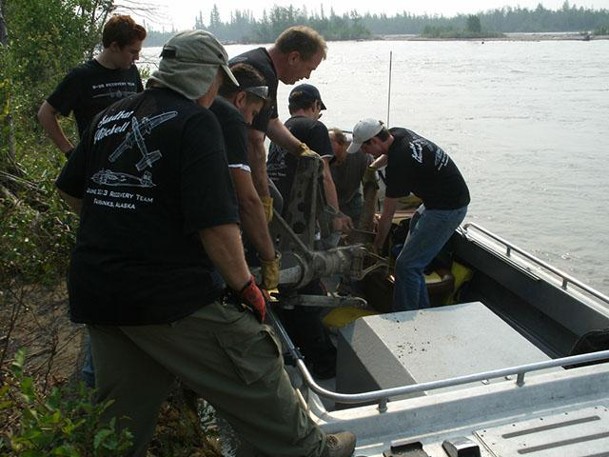
Recovery began on the morning of June 23, 2013 with a safety briefing at the Fort Wainwright military base in Fairbanks, Alaska. As the crash site was located in the danger zone of a military gunnery range, the team had to learn about the types and hazards of unexploded ordinance. The recovery team then split into two groups. Team One traveled to the sandbar to clear a path and the area surrounding the aircraft, while Team Two built the wooden lifting stands for the center section. The trip down the Tanana River in a flat-bottomed riverboat took 40 minutes round trip (from where?).
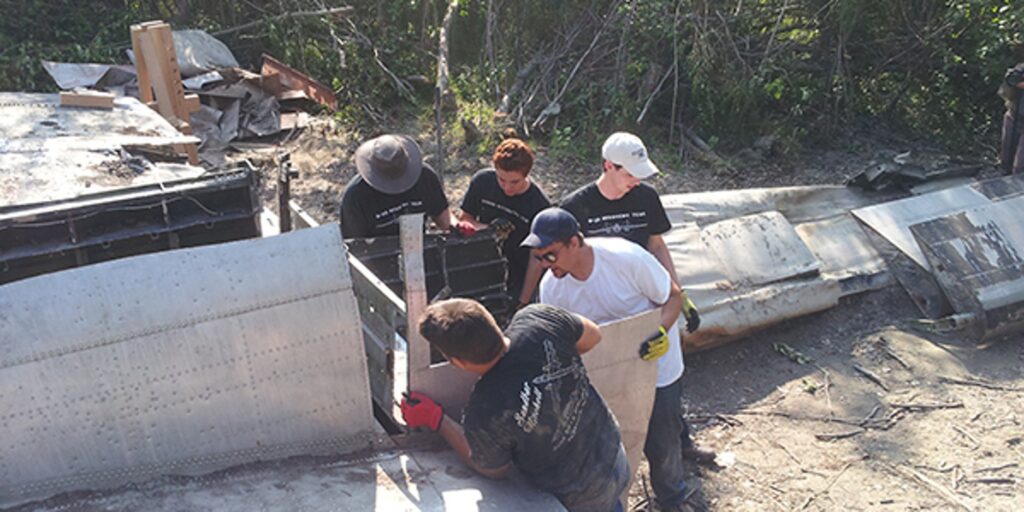
By day four, major components of the airframe were being disassembled
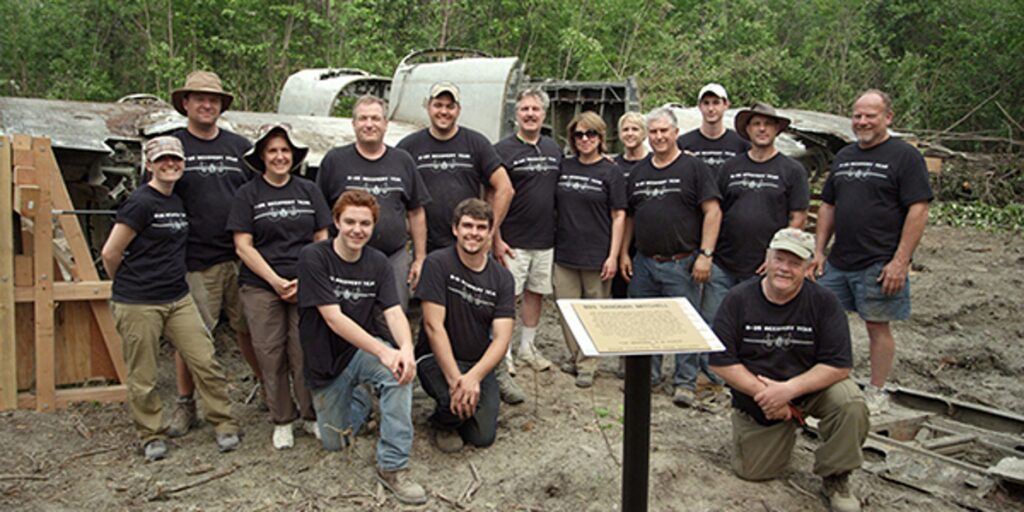
On June 27th, exactly 44 years to the day that Sandbar Mitchell crash-landed, Patrick conducted a ceremony to dedicate a memorial honoring Edgar Thorsrud and Herm Gallaher for their service as firefighters. The remaining time that afternoon included removing the remaining sections of the fuselage via riverboat.
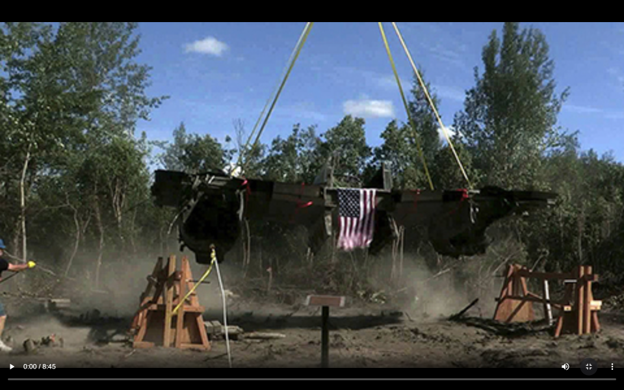
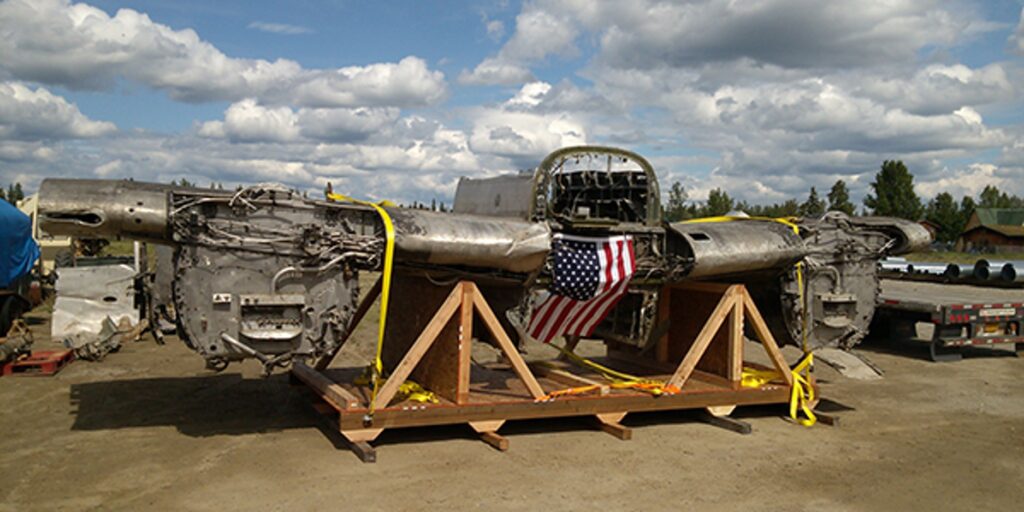
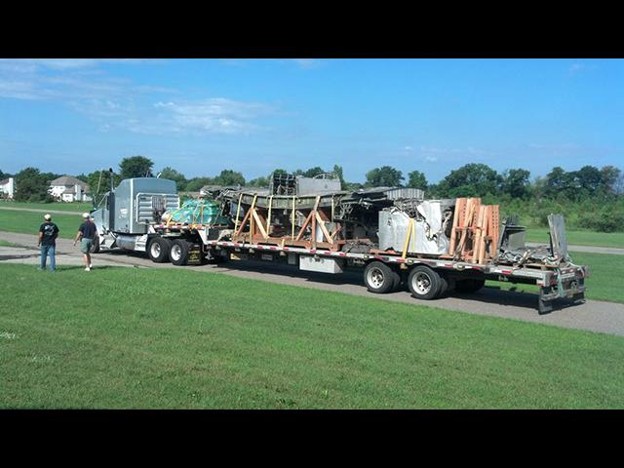
On July 5, 2013 Construction Helicopters, Inc. of Howell, Michigan airlifted the center section off the sandbar. The following day the section was further disassembled and packaged for its 3,700 mile journey to the Warbirds of Glory Museum in Michigan.
Clarktor 6
In 2022, the Warbirds of Glory Museum was gifted with a Clarktor 6 -Standard 24 aircraft tug with a rather unique history. Its serial number indicates that it was built in a manufacturing block which indicates that it was built between 1940 and 1946. It was shipped on November 23, 1946 to the Hudson Motor Car Company in Detroit, Michigan. Hudson manufactured cars in Detroit from 1909 until 1954 when it merged with Nash-Kelvinator to form American Motors Corporation (AMC). The Hudson name was discontinued in 1957. The name Hudson came from Joseph L. Hudson, the Detroit department store entrepreneur who provided seed capital and his name to found Hudson Motor. This legacy is corroborated by the fact that our Clarktor has a secondary, triangular brass serial number plate affixed to the frame which is the same geometric design that Hudson Stores used.
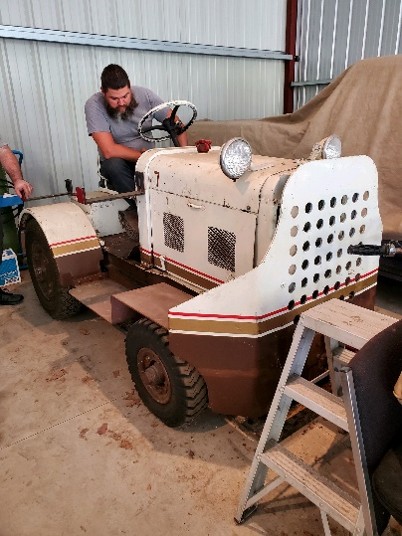
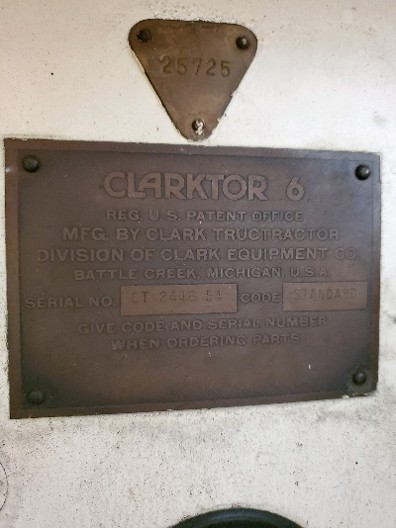
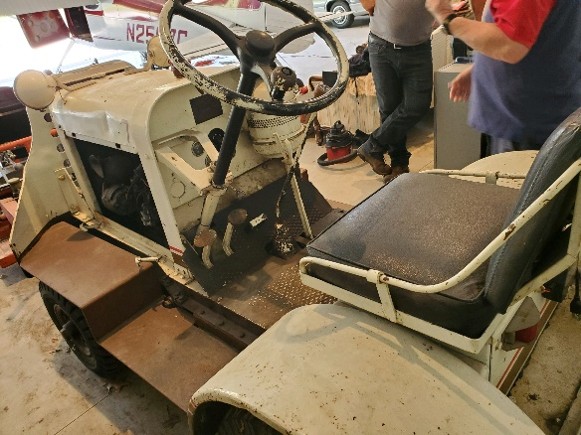
Given the 1946 shipping date it is likely that our tug was part of the Clark Tructractor Company World War 2 surplus inventory. After its first stop with an automotive manufacturer, Clark was notified in August, 1982 that it belonged to S.C.P. Leasing in Lansing, Michigan. Our donor purchased the Clarktor from General Aviation in Lansing, Michigan in the mid-1980s.
The Clarktor 6 was built from 1940 until 1966. It weighs 4,700 pounds and has a top speed of 12 miles per hour. It is powered by a 6 cylinder 63 horse power Chrysler engine, can pull 90 tons with a 2-ton drawbar and was used to tow bombs, materials and all Allied heavy bombers including Lancasters, B-24s, B-17s and B-29s. John Norris has written a wonderful history of the Clarktor-6 on the Military Trader Vehicles website. This includes the following passage: “As early as 1941, the Clark company of (Battle Creek, Michigan) was already producing around 90% of the military requirement for heavy-lift equipment including forklift trucks and tow tractors. By the end of the war in 1945, it was said that there was not an Allied airfield in America, Britain or Europe which did not have a Clark vehicle on it. Add part regarding Clark and lift….
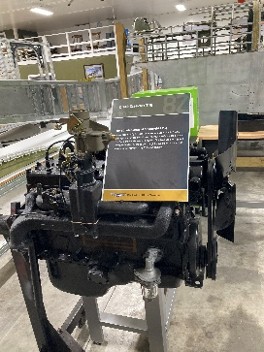
Restoration began in xxx beginning with the engine.
The Warbirds of Glory Museum has acquired two 1943 Army Air Corps M-2 Cletrac aircraft tugs. Over 8,500 Cletracs were manufactured by the Cleveland Tractor Company during World War 2. The M-2 was designed to work on unimproved airfields (muddy, sandy, snowy) in all theaters of operation. It weighs nearly 7 tons and can reach a speed of 22 miles per hour. The vehicle was operated by a three-man crew. Accessories included an air pump to inflate landing struts, a 10,000 pound capacity winch with 300 feet of cable and an electrical generator to start aircraft.
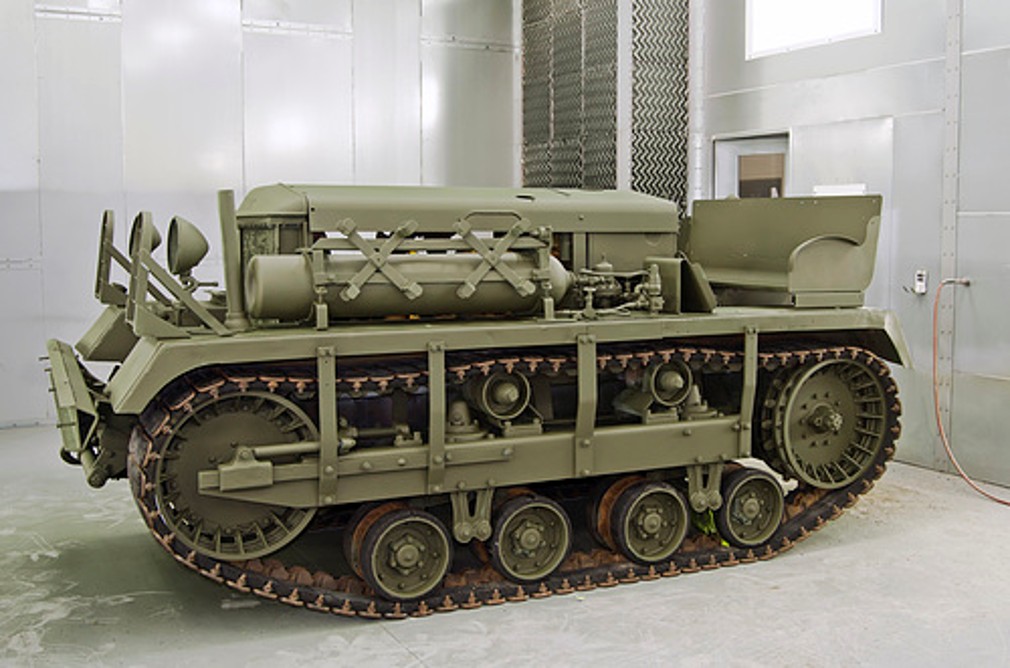
After World War 2 our M-2 Cletrac was sold to the farm in Acem, Michigan where it toiled for many years until it was kindly donated to the museum by John Doe in July, 2023.
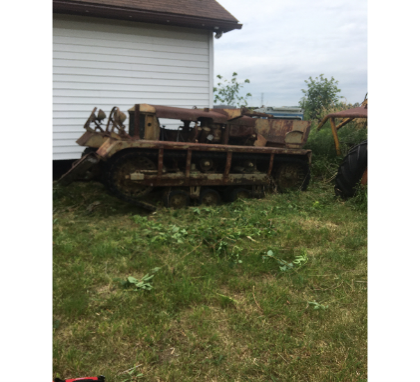
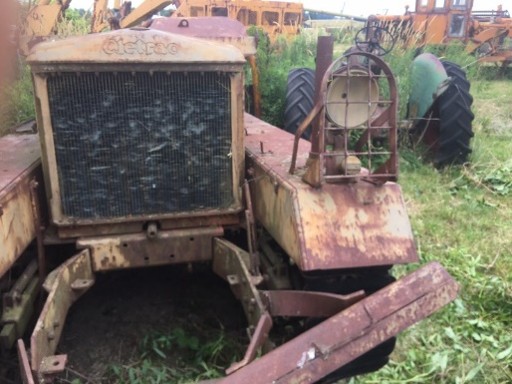
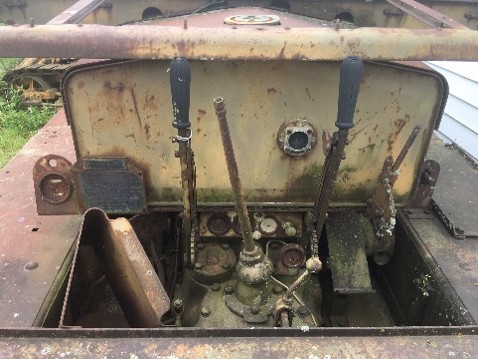
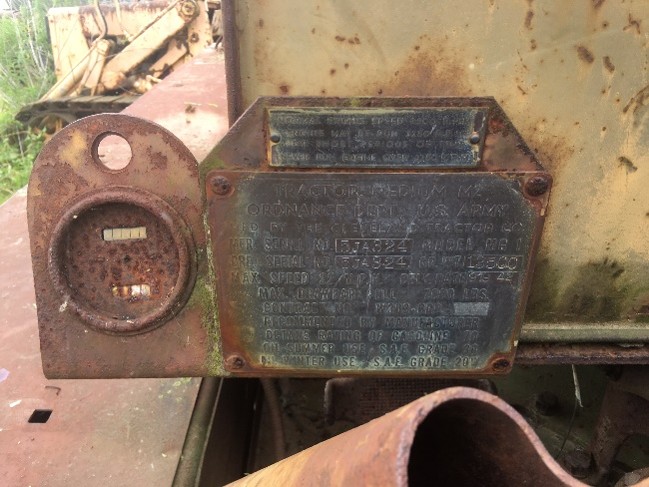
The data plate includes the delivery date to the U.S. Army which was September 19, 1942
Restoration pictures & process…..
To date, restoration efforts of the M-2 have been confined to planning and sourcing hard-to-find parts such as the air compressor and rubber tracks.
Pictures…..
Parts Needed……
Pictures….. Descriptions…..
A Front-Line Project from WW2 battles in Alaska
In June 1942 Japan bombed U.S. Army and Navy facilities in Dutch Harbor and invaded the islands of Attu and Kiska. Historians offer different reasons for this attack including a diversionary tactic associated with the attack on Midway Island, disrupting U.S. shipping to Russia and protecting Japan’s northern flank. After repeated air, land and sea battles the Japanese withdrew their forces from Alaskan territory at the end of July, 1943.
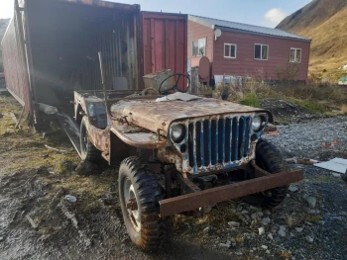
In 2021, Warbirds of Glory acquired a front-line project from the Alaskan Aleutian Islands battles of World War 2. It is a 1943 GBW Ford Jeep which was acquired from a donor in Dutch Harbor.